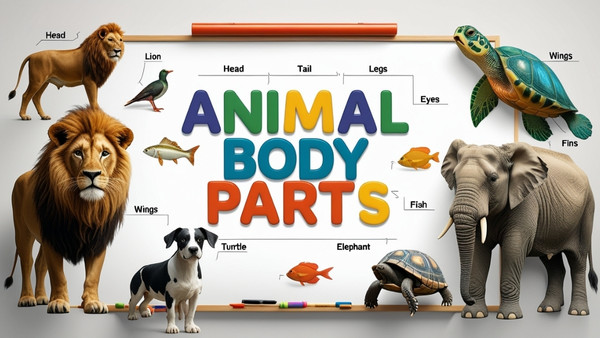
Animals are truly amazing. Every which can fly through the air or walk on the ground has a body that helps it live and move. For example, water creatures have fins to help them swim.
Each part of an animal’s body, from a paw to a feather, is very essential. These parts are helpful for creatures to live, move, and feed. Let’s take a look at some of these body corridors and see why they are so important.
Animal Body Parts and Functions
Think of these as the absolute headquarters and command centers.
| Body Part |
Description |
Function |
Example |
| The Head |
It’s the top part, housing all the important gear. |
It’s the computer. It controls everything and hosts the vital senses needed to know the world. |
The Fox: It relies completely on its head and senses to hunt quietly in the dark. |
| Eyes |
Those things we use to look around. |
Seeing! But it’s not all the same. Some eyes are built for darkness; others are for extreme distance. |
The Owl: Its eyes are massive, allowing it to see a tiny mouse moving on the ground in almost total darkness |
| Ears |
The little flaps for hearing. |
Hearing: Animals use them not just for hearing. Also, assist them in controlling their body temperature. |
The Elephant: Huge ears aren’t just for hearing. Work as cooling fans to beat the African heat. |
| Nose/Snout |
Useful part for sniffing and breathing |
Smelling. It assist animals in finding food, friends, and smelling danger from distance. |
The Pig: Uses its powerful snout to root around and dig up tasty bits underground. |
| Mouth/Beak |
Useful part for eating food. |
Useful for Eating, drinking, and chatting. Sharp for meat, flat for plants, or a strong hook for tearing. |
The Pelican: It has a giant, stretchy pouch attached to its beak that works like a net. |
| The Neck |
Flexible part that connect head with body. |
Maneuverability. Assists animal in moving its head to check for threats or reach food in tricky spots. |
The Goose: A long, flexible neck is perfect for fishing. |
| The Body (Torso) |
The main trunk that holds everything. |
It’s the powerhouse. It holds the main muscles and all the life-support systems |
The Horse: Needs a strong, deep torso to hold the huge lungs for long running. |
Animal Limbs and Movement
| Part |
What It Does |
Why It’s Important |
| Legs |
The parts animals walk on. |
Help animals run, walk, or hop on the ground. |
| Wings |
Push against the air to fly. |
Let animals escape danger and travel long distances. |
| Fins |
Flat parts on water animals. |
Help animals swim, turn, and stop in water. |
| Paws |
Soft, padded feet with claws. |
Help animals move quietly, grab things, and land softly. |
| Hooves |
Hard covering on feet of animals like horses. |
Protect feet and absorb shock when running fast. |
| Claws |
Sharp tips on toes or fingers. |
Used to catch food, hold things, or climb trees. |
Covering and Protection—The Animal’s Armor️
The outermost layer is often the first and best line of defense.
- Fur: This is thick, dense hair. Its main job is insulation keeping warm when it’s freezing! Think of a thick sweater for a bear.
- Feathers: Light, beautiful, and very structured. They make flight possible and keep a bird waterproof and toasty.
- Scales: Hard plates, like tiny tiles, found on fish and reptiles. They act as armor against scratches and help prevent water loss.
- Shells: The ultimate hard house. They offer total, external protection. A threatened turtle can just pull right inside its shell and wait out the danger.
- Skin: The layer covering everything. Besides holding it all in, it helps with breathing (in some frogs!) and can change color for camouflage (in chameleons).
Unique or Special Animal Body Parts
These parts are so specialized, you often only see them on one type of animal.
- Trunk (Elephant): This is like a nose, and a straw all in one. It contains 40 thousand muscles. Useful to carry small things, and spray water. Also helpful for elephants to breathe.
- Horns (Cows, Sheep): Hard bones on head. Useful for protection from predators or to fight against other animals.
- Antlers (Deer, Moose): These are like bones that grow right out of the head. They are shed and regrown every single year massive energy investment! They are used for aggressive display and sparring.
- Tail (Various Animals): Tails is also a useful part. A monkey uses it as a fifth hand for gripping and a Kangaro uses if to make body balance.
- Tentacles (Octopus, Squid): Long, sucker-covered arms. They are super strong and flexible, used to move.
Internal Body Parts (The Machinery)
These are the things working non-stop to keep the engine running.
- Heart: The most important muscle. Helpful in pushing blood all over the place to deliver oxygen and energy.
- Lungs: The air sacs. They take oxygen in when an animal breathes and push old, used-up air out.
- Stomach: This is a muscular bag. Useful for mixing food and converting in energy.
- Brain: The central computer. It processes information from the senses, sends signals for movement.
- Bones: The hard parts that make up the whole body skeleton. They provide the framework and support for the body. Useful for protecting the soft organs in the body.
Animal Body Parts Name in English
Body Parts of a Lion
- Head
- Mane
- Eyes
- Ears
- Nose
- Mouth
- Teeth
- Tongue
- Whiskers
- Neck
- Shoulders
- Legs
- Paws
- Claws
- Chest
- Back
- Belly
- Tail
- Skin
- Fur
Body Parts of a Pig
| Body Parts |
Body Parts |
| Snout |
Ears |
| Mouth |
Teeth |
| Tongue |
Neck |
| Shoulders |
Chest |
| Back |
Belly |
| Legs |
Forelegs |
| Hind legs |
Knees |
| Hooves |
Tail |
| Skin |
Hair |
| Ribs |
Spine |
Turtle Body Parts
- Nose
- Mouth
- Beak
- Neck
- Shell
- Carapace
- Plastron
- Scutes
- Spine
- Shoulders
- Chest
- Belly
- Legs
- Feet
- Claws
- Tail
- Skin
- Scales
- Eyesocket
- Jaw
Dog Body Parts
| Body Parts |
Body Parts |
| Muzzle |
Whiskers |
| Mouth |
Tongue |
| Neck |
Shoulder |
| Chest |
Elbow |
| Foreleg |
Wrist |
| Paw |
Toes |
| Claw |
Back |
| Withers |
Ribs |
| Abdomen |
Hip |
| Thigh |
Hock |
Body Parts of a Duck
- Beak
- Nostrils
- Neck
- Shoulders
- Chest
- Back
- Belly
- Wings
- Feathers
- Tail
- Legs
- Thighs
- Knees
- Feet
- Toes
- Claws
- Skin
- Bones
- Heart
- Brain
Body Parts of a Horse
| Body Parts |
Body Parts |
| Muzzle |
Neck |
| Withers |
Shoulder |
| Chest |
Back |
| Ribs |
Belly |
| Flank |
Hip |
| Croup |
Tail |
| Thigh |
Stifle |
| Hock |
Foreleg |
| Elbow |
Knee |
| Hoof |
Fetlock |
Bird Body Parts
- Beak
- Nostril
- Crown
- Neck
- Throat
- Shoulder
- Back
- Wing
- Chest
- Belly
- Flank
- Tail
- Thigh
- Knee
- Leg
- Foot
- Toes
- Claws
- Plumage
- Feathers
Body Parts of a Cow
| Body Parts |
Body Parts |
| Horn |
Nose |
| Muzzle |
Mouth |
| Neck |
Shoulder |
| Dewlap |
Chest |
| Brisket |
Back |
| Ribs |
Abdomen |
| Flank |
Hip |
| Rump |
Tail |
| Udder |
Teats |
| Leg |
Hoof |
Goat Body Parts
- Horn
- Muzzle
- Mouth
- Beard
- Neck
- Shoulder
- Chest
- Back
- Belly
- Flank
- Hip
- Rump
- Tail
- Thigh
- Hock
- Leg
- Foreleg
- Knee
- Hoof
- Udder
Body Parts of a Crab
| Body Parts |
Body Parts |
| Eye stalks |
Mouth |
| Antennae |
Carapace |
| Cephalothorax |
Abdomen |
| Claws |
Pincers |
| Walking legs |
Swimming legs |
| Joints |
Shell spine |
| Gills |
Heart |
| Stomach |
Intestine |
| Tail flap |
Exoskeleton |
| Mandibles |
Maxillipeds |
Bee Body Parts
- Compound eyes
- Simple eyes
- Antennae
- Mouth
- Proboscis
- Thorax
- Abdomen
- Wings
- Legs
- Pollen basket
- Claws
- Stinger
- Spiracles
- Heart
- Brain
- Crop
- Wax glands
- Exoskeleton
- Forewings
- Hindwings
Body Parts of a Chicken
| Body Parts |
Body Parts |
| Beak |
Comb |
| Earlobe |
Wattle |
| Neck |
Shoulder |
| Back |
Wing |
| Breast |
Belly |
| Flank |
Tail |
| Thigh |
Knee |
| Shank |
Spur |
| Toes |
Claws |
| Feathers |
Vent |
Body Parts of a Cat
- Muzzle
- Whiskers
- Mouth
- Tongue
- Neck
- Shoulder
- Chest
- Back
- Ribs
- Belly
- Hip
- Thigh
- Hock
- Leg
- Paw
- Toes
- Claws
- Tail
- Fur
- Chin
Fish Body Parts
| Body Parts |
Body Parts |
| Mouth |
Nostril |
| Gills |
Dorsal fin |
| Caudal fin |
Anal fin |
| Pectoral fin |
Pelvic fin |
| Scales |
Lateral line |
| Tail |
Fin rays |
| Spine |
Heart |
| Stomach |
Intestine |
| Liver |
Swim bladder |
| Kidney |
Brain |
Body Parts of an Elephant
- Trunk
- Mouth
- Tongue
- Tusk
- Nose
- Neck
- Shoulder
- Chest
- Back
- Belly
- Flank
- Leg
- Knee
- Foot
- Toes
- Nails
- Tail
- Skin
- Brain
- Spine
Body Parts of a Camel
| Body Parts |
Body Parts |
| Mouth |
Lips |
| Neck |
Hump |
| Shoulder |
Chest |
| Back |
Ribs |
| Belly |
Flank |
| Hip |
Rump |
| Tail |
Thigh |
| Knee |
Leg |
| Hoof |
Pad |
| Skin |
Fur |
Fun Facts About Animal Body Parts
- A snail has 14 thousand small teeth. Those are useful in scraping food.
- The weight of the tongue of a blue whale is equal to a whole elephant.
- Starfish can regrow their cut arms.
- There are valves in a giraffe’s neck. They can stop blood flow to the heads.
- Male monkeys have big noses. It also assists them in calling loudly.
- Crocodiles’ bite is strongest on land.
- Frogs can push food down by using their eyes.
- Kangaroos use their tails to maintain balance.
- Octopuses have blue blood. Also have three hearts.
- Penguins can use their wings like flippers to swim.
- Snakes can smell by the use of their tongues.
- Spiders have additional eyes to see things in the dark.
- Owls can turn their head in all directions.
Conclusion
So the Animal body is not just collections of parts. It is an amazing proof of creator who create them. All the animals have body parts to survive, eat and its own house. It show the detailed life of animals. If you keep looking, you will keep finding more amazing things!
Frequently Asked Questions
What are the elephant body parts?
| Column 1 |
Column 2 |
Column 3 |
| Head |
Mane |
Eyes |
| Ears |
Nose |
Mouth |
| Teeth |
Tongue |
Whiskers |
| Neck |
Shoulders |
Legs |
| Paws |
Claws |
Chest |
| Back |
Belly |
Tail |
| Skin |
Fur |
— |
What are the animal body parts names?
- Head
- Neck
- Shoulder
- Arm
- Hand
- Chest
- Back
- Stomach
- Leg
- Foot
Which are the Covering and Protection body parts of animals?️
- Fur: This is thick, dense hair. Its main job is insulation keeping warm when it’s freezing! Think of a thick sweater for a bear.
- Feathers: Light, beautiful, and very structured. They make flight possible and keep a bird waterproof and toasty.
- Scales: Hard plates, like tiny tiles, found on fish and reptiles. They act as armor against scratches and help prevent water loss.